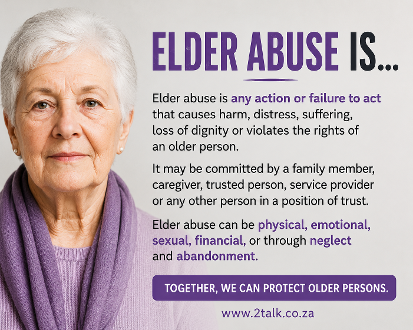
Elder abuse can occur in private homes, communities, hospitals, residential care facilities and old age homes.
Types of elder abuse include:
- Physical abuse – hitting, pushing, restraining, rough handling, or causing physical injury.
- Emotional or psychological abuse – intimidation, threats, humiliation, insults, isolation, controlling behaviour, or treating an older person with disrespect.
- Sexual abuse – any unwanted sexual contact, sexual act, exploitation, harassment, or exposure to sexual material.
- Financial abuse or exploitation – theft, fraud, misuse of bank accounts, pensions, property, grants, powers of attorney, or pressuring an older person to sign documents.
- Neglect – failing to provide adequate food, shelter, clothing, medical care, supervision, or assistance when responsible for the person's care.
- Abandonment – deserting or leaving an older person without appropriate care, support or protection.
Warning signs may include unexplained injuries, fearfulness, withdrawal, poor living conditions, sudden financial problems, malnutrition, untreated medical conditions, or changes in behaviour.
Every older person has the right to live in safety, dignity and respect. If you suspect that an older person is being abused, neglected or exploited, report your concerns to the South African Police Service (SAPS), the Department of Social Development, a social worker, or an organisation that supports older persons.